
Complex, high-cost therapies create an unusual challenge for self-funded employers: provide employees with access to potentially life-changing care while managing highly unpredictable clinical and financial exposure. From transplant to cell & gene therapy (CGT)—and increasingly personalized treatments—the right strategy starts with understanding your population, not relying on averages.
Emerging Therapy Solutions helps employers see risk earlier, manage care more effectively and build a strategy that reflects their benefit philosophy and risk tolerance.
What began with rare, highly specialized treatments is expanding rapidly. As new cell, gene and personalized therapies reach broader patient populations, employers will face these decisions more frequently—and across a growing range of conditions.


Rare diseases.
Highly specialized treatment.
Smaller eligible populations.
Later-line treatment.
EXAMPLES:
Hemophilia
Spinal muscular atrophy
Inherited retinal disease
Select blood cancers

More indications.
Larger eligible populations.
CGT expanding across rare disease and oncology.
Treatment moving earlier in the care pathway.
EXAMPLES:
Sickle cell disease
Multiple myeloma
Lymphoma
Melanoma
Duchenne muscular dystrophy

Broader populations.
Personalized medicine.
Advanced therapies reaching more prevalent conditions.
Treatment increasingly individualized to the patient.
EXAMPLES:
Autoimmune disease
Cardiovascular disease
Diabetes
Personalized oncology
In vivo therapies
Two employers can each cover 20,000 lives and have dramatically different advanced therapy exposure. Age, diagnoses, disease progression, treatment history and other clinical factors within the population determine who may actually progress toward treatment.
That’s why population size alone is not enough. ETS combines actuarial forecasting with claims surveillance and Proactive Patient Identification to help employers understand their actual risk—not an industry average.
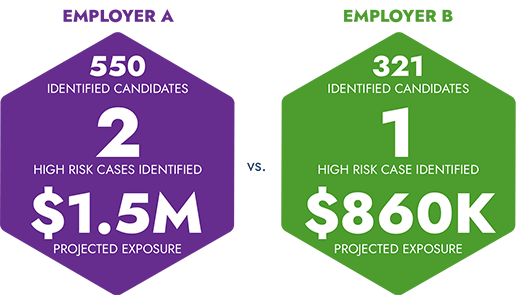
Same population size.
Completely different risk.
Organ and stem cell transplants remain among the most complex and costly events in employer-sponsored healthcare. And as treatment pathways evolve, the lines between transplant, cell therapy and gene therapy are increasingly interconnected.
ETS360™ brings these complex therapies into one coordinated strategy—giving employers a broader view of high-cost clinical risk rather than managing each category in isolation.
Every employer has a different population, benefit philosophy and tolerance for risk. ETS360 gives you the flexibility to use the complete platform or select the capabilities that strengthen your existing benefits strategy.

WHAT ETS360 MANAGES
Your benefit strategy doesn’t have to look like everyone else’s.
Neither does your ETS360 solution.
HOW ETS360 WORKS FOR EMPLOYERS
 Predict™
Go beyond population averages to identify specific employees progressing toward advanced therapies and their eligibility, and to predict your specific clinical and financial risk.
Proactive Patient Identification • Claims Surveillance • Pipeline Intelligence
 Navigate™
Guide employees to therapy-specific centers of excellence (COEs) and the appropriate site of care based on quality, experience and individual needs.
Therapy-Specific COEs • 180+ Medical Centers • Site-of-Care Strategy • Patient Navigation & Support
 Care™
Provide specialized clinical management and patient support while removing complexity from the benefits team and reducing unnecessary barriers for providers.
Flexible Medical Policy • Rapid Prior Authorization/Utilization Management • Physician Review • Patient Support • Genetic Counseling
 Protect™
Manage the underlying cost first, then decide whether retaining risk, transferring it through stop-loss or reinsurance, or combining approaches makes the most sense.
Cost Containment • Transparent Contracts • Outcomes Protection • Stop-Loss & Reinsurance Options
ETS has transparent, comprehensive contracts in place across 180+ leading medical centers, covering the total episode of care for transplant, cell and gene therapy. We combine competitive rates with therapy-specific quality standards to help employers reduce costs without compromising where employees receive care.
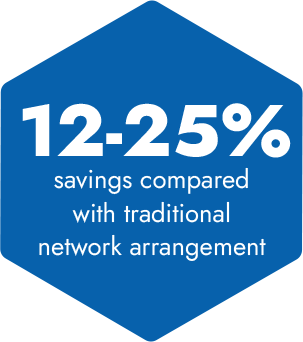
Your ASO plays an important role in administering your health plan—but complex therapies require specialized capabilities that extend beyond traditional claims administration.
From proactive patient identification and therapy-specific COE evaluation to specialized clinical management, transparent episode-of-care contracting and outcomes protection, ETS fills the gaps between traditional benefit administration and complex-therapy management.
ETS works alongside your existing partners to fill those gaps.
Your ASO, stop-loss carrier and other benefit partners each play a role. ETS brings specialized intelligence, provider strategy, clinical expertise and risk-management capabilities together—helping you build an approach around your employees, your benefits philosophy and your actual exposure.
Copyright © 2026. Emerging Therapy Solutions. All Rights Reserved.